



Key Limitations:
– She/he should have ≤ 4 years of postdoctoral work experience.
– She/he cannot receive more than one fellowship in consecutive years.
Key Benefits:
– Free registration (incl. social events & lunches) – Accommodation & Travel support from ESHG ≤ €600.- – Additional support from the CSHG for remaining associated expenses ≤ €400.-

Year 2024
| Name and Title | Kristia Yiangou, PhD |
| Affiliation | The Cyprus Institute of Neurology & Genetics |
| Abstract Title | Differences in polygenic score distributions in European ancestry populations: implications for breast cancer risk prediction |
Year 2023
| Photograph | 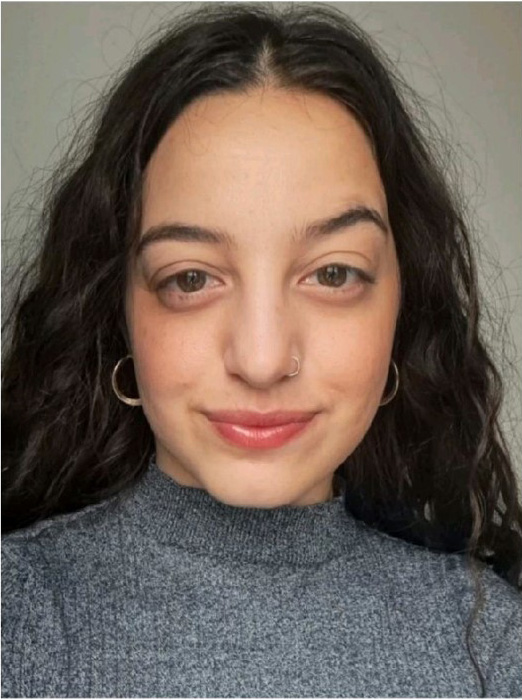 |
| Name and Title |
Denise O'Mahony, PhD |
| Affiliation |
The Cyprus Institute of Neurology & Genetics |
| Abstract Title | Large scale case-control analyses of rare variant data; application to BRCA1 and BRCA2 |
Year 2022
| Photograph |  |
| Name and Title |
Ouranio Anastasiou, PhD |
| Affiliation |
Karaiskakio Foundation Cyprus |
| Abstract Title | The rare case of a patient with neurodevelopmental disorder with epilepsy |
Year 2021
| Photograph |  |
| Name and Title |
Paraskevi Chairta, PhD |
| Affiliation |
The Cyprus Institute of Neurology and Genetics |
| Abstract Title |
Prediction of Parkinson’s disease risk based on genetic profile and established risk factors |
Year 2020
| Photograph |  |
| Name and Title |
Maria Zanti, MSc |
| Affiliation |
The Cyprus Institute of Neurology and Genetics |
| Abstract Title |
A comprehensive in silico analysis of the functional, structural and stability impact of the PALB2 p.Leu1143His variant of uncertain clinical significance. |
Year 2019
| Photograph | 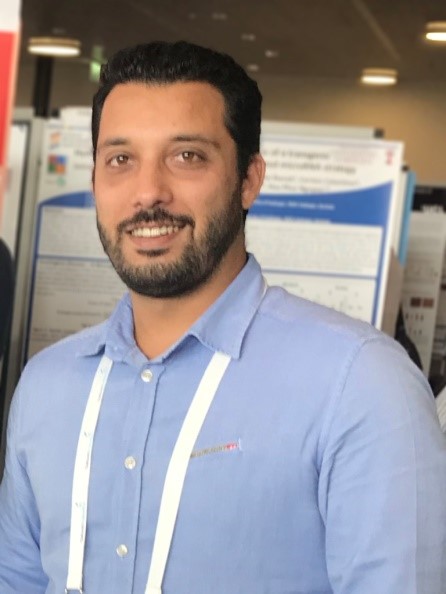 |
| Name and Title | Petros Patsali, PhD |
| Affiliation |
The Cyprus Institute of Neurology & Genetics |
| Abstract Title | Safe and efficient personalised TALEN- and CRISPR/Cas9-based gene correction therapy for β-thalassaemia by non-viral delivery to primary cells |
Year 2018
| Photograph |  |
| Name and Title | Constantia Aristidou, PhD |
| Affiliation | The Cyprus School of Molecular Medicine |
| Abstract Title | Patient-specific variants identified by whole-exome sequencing underlie discordant phenotypes in familial apparently balanced translocations |
Year 2017
| Photograph |  |
| Name and Title | Petros Patsali, MSc |
| Other Distinction | ESHG YOUNG INVESTIGATOR AWARD CANDIDATE 2017 Selected oral presentation |
| Affiliation | King’s College London & The Cyprus Institute of Neurology and Genetics – Department of Molecular Genetics Thalassaemia |
| Abstract Title | Less means more: knockdown of aberrant HBBIVSI-110(G>A) mRNA restores HBB expression and enhances gene therapy by gene addition in primary erythroid cells |
| Authors and Affiliations | Petros Patsali, MSc1,2,*, Panayiota Papasavva, PhD1,3, Coralea Stephanou, MSc1,2,Soteroulla Christou, MD4, Maria Sitarou, MD4, Michael N Antoniou, PhD2, Carsten W Lederer, PhD1,3and Marina Kleanthous, PhD1,3
1Molecular Genetics of Thalassemia Department, The Cyprus Institute of Neurology and Genetics, Nicosia, Cyprus, 2370; 2Department of Medical and Molecular Genetics, King’s College London, London, United Kingdom, SE1 9RT; 3Cyprus School of Molecular Medicine, 1683 Nicosia, Cyprus; 4Thalassaemia Centre, Ministry of Health, Cyprus; * Presenting Author (PetrosPa@cing.ac.cy) |
| Abstract | Mutations reducing β-globin production and thus causing β-thalassemia are of global clinical importance. β-Thalassemia caused by the HBBIVSI-110(G>A) mutation (HGVS name: HBB:c.93-21G>A), which produces an abnormal splice acceptor site, is particularly frequent in many Western countries and causes severe thalassemia major in homozygotes. Preclinical and clinical studies have highlighted patients with HBBIVSI-110(G>A) as difficult to treat with gene therapy by gene addition, suggesting an effect of the mutant locus on normal, endogenous or vector-encoded, β-globin alleles. Towards improved gene-addition treatment of affected patients and supposing that the mutant locus acts in trans by aberrant HBBIVSI-110(G>A)-derived mRNA, we therefore set out to reduce the latter by RNA interference. We recognised, first in a novel humanised murine erythroleukemia model and then in primary CD34+-derived erythroid cells from HBBIVSI-110(G>A)-homozygous patients, that specific knock-down of the aberrant HBBIIVSI-110(G>A) mRNA alone results in extremely significant induction of β-globin production from the mutant locus. In primary cells the resulting β-globin expression and phenotypic correction of erythroid-lineage differentiation is equal to or exceeds that achieved by same-sample control treatment with the clinically successful GLOBE gene-therapy vector. Furthermore, combination of HBBIVSI-110(G>A) knockdown with GLOBE results in significant improvement of both disease parameters compared to either treatment alone. This study establishes aberrant HBBIVSI-110(G>A) mRNA as the main causative agent of disease severity in HBBIVSI-110(G>A) thalassaemia and as a potent target for mutation-specific gene therapy for β-thalassaemia. It moreover puts forward HBBIVSI-110(G>A) thalassaemia as a paradigm for the importance of allelic heterogeneity when applying gene therapy by gene addition. |
Year 2016
| Photograph |  |
| Name and Title | Maria Loizidou, PhD |
| Affiliation | The Cyprus Institute of Neurology and Genetics – Department of Electron Microscopy and Molecular Pathology |
| Abstract Title | <no abstract submitted> |
| Authors and Affiliations | <no abstract submitted> |
| Abstract | <no abstract submitted> |
Year 2015
| Photograph |  |
| Name and Title | Petros Patsali, MSc |
| Affiliation | King’s College London & The Cyprus Institute of Neurology and Genetics – Department of Molecular Genetics Thalassaemia |
| Abstract Title | Towards gene correction of IVS1-110 β-thalassaemia |
| Authors and Affiliations | Petros Patsali, MSc1,2, Claudio Mussolino, PhD3, Coralea Stephanou, MSc1,2, Michael N Antoniou, PhD2, Toni Cathomen, PhD3, Carsten W Lederer, PhD1,* and Marina Kleanthous, PhD1
1Molecular Genetics of Thalassemia Department, The Cyprus Institute of Neurology and Genetics, Nicosia, Cyprus, 2370; 2Department of Medical and Molecular Genetics, King’s College London, London, United Kingdom, SE1 9RT; 3Institute for Cell and Gene Therapy, University Medical Center Freiburg, Freiburg, Germany, 79106; * Presenting Author (PetrosPa@cing.ac.cy) |
| Abstract | Thalassemia is amongst the commonest single-gene disorders worldwide and caused by deficient production of α- or β-globin. The disease has limited curative treatment options, but as a monogenic disorder of the hematopoietic system is ostensibly an ideal target for gene therapy. Specific β-thalassemia mutations have already been addressed by the burgeoning field of genome editing, targeting mutations of minor prevalence in the West and combining homology-mediated gene repair with the expansion of corrected iPS cell clones Our research is focused on the development of efficient gene-correction tools (TALENs and CRISPR-Cas9) specific for the common and severe HBBIVS1-110 (G>A) mutation, which in most Mediterranean and many Western countries has a frequency of above 20% (with 80% on the island of Cyprus) amongst β-thalassemia carriers. This mutation introduces an abnormal splice acceptor site in intron 1 of the β-globin gene, therefore retaining an intronic in-frame premature stop codon in the mature, aberrantly spliced mRNA. In this study, we illustrate the high cleavage activity of novel IVS1-110-specific genome-editing tools (TALENs and CRISPR-Cas9) in HEK293T cells and in HBBIVS1-110-transgenic murine erythroleukemia cells. Towards the assessment of therapeutic efficiency of our designer nucleasese at the mRNA level, we have validated a multiplex RT-qPCR method for the absolute quantification of the correctly and aberrantly spliced HBB mRNAs. Finally, immunoblots indicate the partial correction of β-globin protein expression in treated HBBIVS1-110-transgenic MEL cells compared to mock controls. These preliminary data indicate HBBIVS1-110 as a suitable target for gene therapy genome editing and that our approach may serve as a model for the correction of many other intronic disease-causing mutations. |